How Does Invoice Factoring Work? Step-by-Step Process for UK Businesses
Late-paying invoices have a special talent, don’t they? They always seem to arrive right when
you’ve got wages to cover, suppliers chasing, and a VAT bill looming in the background like an unwanted guest.
If you’ve ever stared at an unpaid invoice thinking, “That money is technically mine… so why can’t I use it?” then you’re already halfway to understanding invoice factoring.
So, how does invoice factoring work in real life for UK businesses? Let’s break it down, step by step, without the boring finance jargon.
What Is Invoice Factoring, Really?
Invoice factoring is a cash flow solution where a business sells its unpaid invoices to a factoring company in exchange for an immediate advance.
Instead of waiting 30, 60, or even 90 days for a client to pay, you unlock most of that money straight away.
It’s not a loan.
It’s more like turning your invoices into usable working capital.
A bit like ordering a takeaway and paying extra for delivery rather than walking across town yourself. You’re paying for speed and convenience.
How Does Invoice Factoring Work? Step-by-Step Process
Here’s how it usually works for UK SMEs and freelancers.
Step 1: You Raise an Invoice as Normal
Nothing changes at the start.
You complete the work, deliver the service, and send your customer an invoice with agreed payment terms.
Maybe it’s £5,000 due in 60 days.
That’s great… except you need that cash now, not in two months.
Step 2: You Send the Invoice to the Factoring Company
Once the invoice is issued, you submit it to your chosen factoring provider.
Most providers make this quick and digital, especially the modern invoice factoring services geared towards smaller businesses.
The factoring company checks:
- The invoice value
- The customer’s creditworthiness
- Whether it meets their criteria
It’s less about your credit score and more about whether your customer is likely to pay.
Step 3: You Get an Immediate Cash Advance
This is the part that makes business owners breathe again.
The factoring provider advances you a percentage of the invoice, usually around 80% to 90%, within 24 to 48 hours.
So, on that £5,000 invoice, you could receive £4,500 almost immediately.
That money can go straight into:
- Payroll
- Stock
- Marketing
- Keeping the lights on (literally)
No awkward overdraft conversations required.
Step 4: The Factor Collects Payment from Your Customer
Here’s a key difference between factoring and discounting.
With invoice factoring, the provider typically takes over the responsibility of chasing payment.
So instead of you sending reminder emails like:
“Just checking this hasn’t slipped through…”
The factor handles the collection process professionally.
For some businesses, that’s a huge relief. For others, it’s a personal choice.
If you’d rather stay in control of customer relationships, you might prefer working with invoice discounting providers instead.
Step 5: The Remaining Balance Is Paid to You (Minus Fees)
Once your customer pays the full invoice amount, the factoring company releases the remaining balance.
Using our example:
- Invoice total: £5,000
- Advance paid upfront: £4,500
- Remaining balance: £500
- Fees deducted: say £100
- Final payment to you: £400
Fees vary depending on turnover, invoice volume, and customer risk.
That’s why it’s worth comparing the best invoice discounting providers UK businesses actually trust, rather than jumping at the first offer.
Why UK Businesses Use Invoice Factoring
Invoice factoring isn’t just for companies in trouble.
Many healthy businesses use it simply to smooth out cash flow.
It’s especially common in industries like:
- Recruitment
- Construction
- Transport and logistics
- Manufacturing
- Creative agencies
Because long payment terms are almost a tradition in some sectors (unfortunately).
Factoring gives you breathing space to grow without waiting around.
Invoice Factoring vs Invoice Discounting: Quick Note
People often confuse the two.
- Invoice factoring: Provider manages collections
- Invoice discounting: You manage collections, provider funds invoices quietly
Both are useful, depending on how hands-on you want to be.
If you’re exploring options, check out trusted invoice factoring services alongside flexible invoice discounting providers to see what fits best.
Is Factoring Right for You?
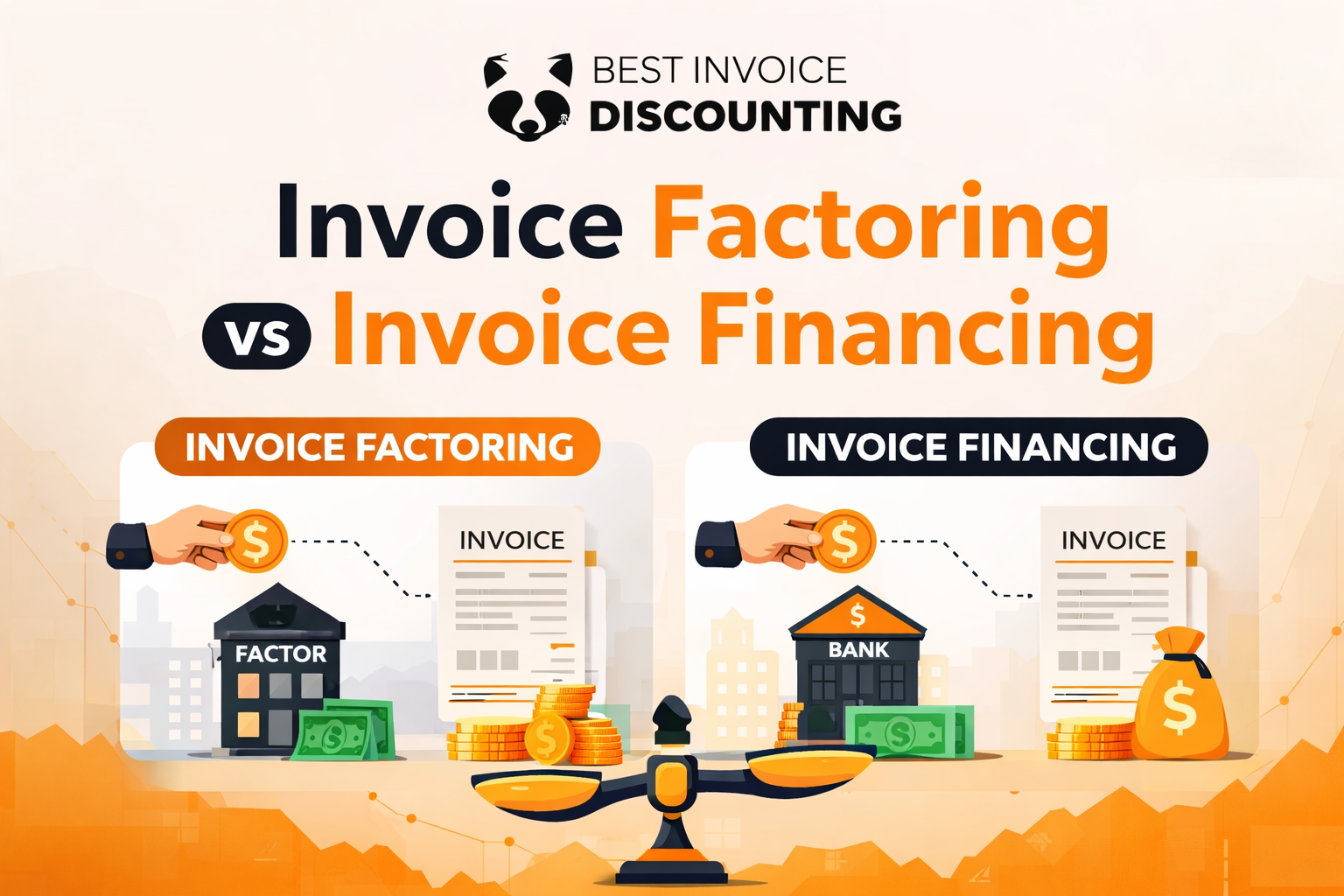
Read Also: Invoice Factoring vs Invoice Financing: How UK Companies Choose the Right Option
If your business is profitable on paper but cash-poor in practice, invoice factoring can be a game changer.
It turns unpaid invoices into fuel for growth.
And honestly, running a business is hard enough without playing detective over overdue payments.
Want to explore your options? Start by comparing the best invoice discounting providers UK businesses rely on and find a funding partner that actually understands your industry.
Because cash flow shouldn’t be the thing holding you back.
FAQs
Ans. Small businesses sell unpaid invoices to a factoring provider, receive an advance, and get the remaining balance once the customer pays.
Ans. No, it’s not borrowing. You’re selling an asset (your invoice) for faster access to cash.
Ans. Most UK invoice factoring services release funds within 24 to 48 hours after invoice approval.
Ans. In most factoring arrangements, yes, because the provider collects payment directly. Invoice discounting can be more confidential.
Ans. Businesses with long payment terms, such as recruitment, construction, logistics, and agencies, often benefit the most.
Discover the Latest Trends
Stay informed with our latest articles and resources.