Invoice Factoring vs Invoice Financing: How UK Companies Choose the Right Option
A surprising number of profitable UK businesses still get caught in the same frustrating trap: the work is done, the invoice is sent, but the cash takes 30, 60, sometimes even 90 days to arrive.
And in the meantime? Payroll doesn’t wait. Suppliers don’t wait. HMRC definitely doesn’t wait.
That’s why more business owners are quietly turning to smarter funding tools like invoice factoring and invoice financing. The tricky part is choosing the right one.
So, if you’ve been searching for a clear, real-world breakdown of invoice factoring vs invoice financing, you’re in the right place.
Let’s make it simple, useful, and actually human.
Why Invoice Funding Matters More Than Ever in the UK
Late payments aren’t just annoying. They can be business-threatening.
For SMEs, freelancers, recruitment agencies, and fast-growing service firms, cash flow gaps can feel like trying to run a marathon while someone keeps tying your shoelaces together.
Invoice funding gives you access to money you’ve already earned, without taking on traditional debt.
But the route you take depends on how you want your business to operate day to day.
What Is Invoice Factoring?
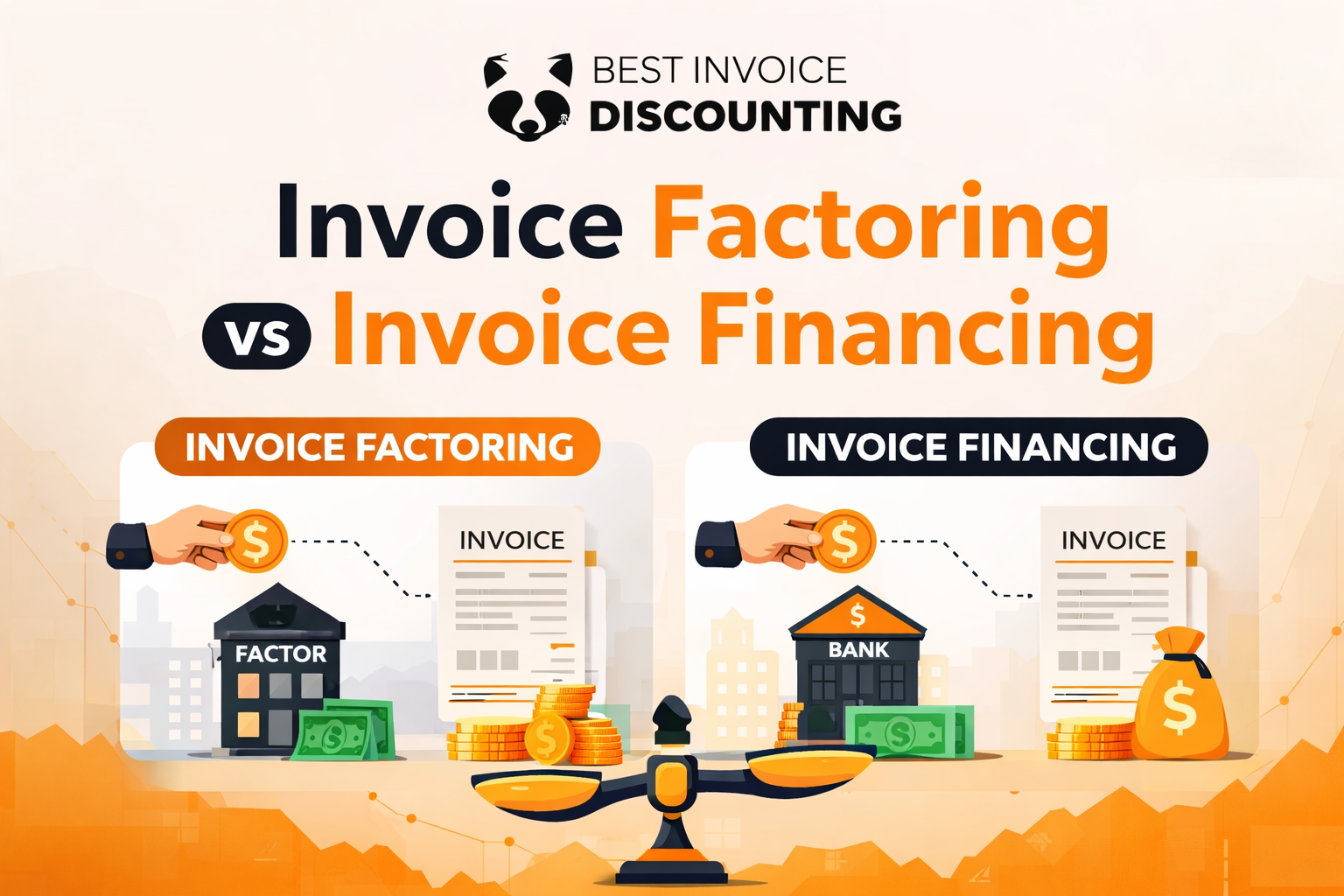
Invoice factoring is a solution where you sell your unpaid invoices to a factoring company.
They advance you most of the invoice value upfront, and they handle collecting payment from your customer.
So yes, someone else does the chasing.
That alone can feel like a weight off your shoulders.
Invoice factoring is often ideal if:
- You don’t have time to manage credit control
- Your customers take a while to pay
- You want a hands-off cash flow solution
- You’re growing quickly and need breathing room
Many businesses use invoice factoring services as a way to stabilise finances without hiring extra admin staff.
And honestly, if you’ve ever spent a Friday afternoon awkwardly emailing a client for payment, you’ll understand why.
What Is Invoice Financing (Invoice Discounting)?
Invoice financing is often used as a broader term, but in practice it usually refers to invoice discounting.
Here, you still borrow against your invoices, but you remain in control of customer relationships.
You collect the payments yourself, and the funding provider stays in the background.
Invoice financing works well when:
- You have a solid finance team in place
- You want customers unaware of the funding
- You prefer to manage your own ledger
- Your business has established processes
Many UK companies prefer this option because it feels more discreet.
Think of it like having a financial safety net under the floorboards. It’s there, but guests don’t see it.
If you’re in a specialist sector, such as staffing, invoice finance for recruitment can be especially valuable because payroll comes weekly, but clients pay monthly.
Invoice Factoring vs Invoice Financing: The Key Differences
Let’s break it down.
Control vs Convenience
Factoring gives you convenience. The provider manages collections.
Financing gives you control. You manage collections.
So the real question is: do you want someone else making the awkward calls?
Customer Interaction
With factoring, your customer knows a factoring company is involved.
With invoice financing, it’s usually confidential.
If maintaining a certain brand image is important, invoice financing often feels like the cleaner fit.
Business Size and Structure
Smaller businesses or startups often lean toward factoring because they don’t have a full accounts department.
More established firms may choose invoice financing because they already have systems in place.
Which Option Do UK Companies Usually Choose?
This is where things get interesting.
Most UK businesses don’t choose based on jargon. They choose based on lifestyle.
Yes, lifestyle.
A busy recruitment founder juggling candidates, clients, and compliance might want factoring because it removes admin headaches.
A manufacturing company with an in-house finance manager may prefer discounting because they want full control.
Choosing between invoice factoring vs invoice financing is less about finance theory and more about how you run your business day to day.
And there’s no shame in either choice.
What About Costs and Flexibility?
Both options involve fees, usually based on:
- Invoice volume
- Customer risk
- Funding amount
- Service level
Factoring tends to cost slightly more because it includes collections and credit control.
Invoice financing is often cheaper, but you’re doing more of the work.
If you’re comparing providers, it helps to explore the best invoice discounting providers UK to find a solution that fits your sector and scale.
Real-World Example: A Growing Agency in Manchester
A small creative agency delivers projects for big-name clients.
The invoices are large. The payment terms are slow.
They’re profitable on paper, but cash is always tight around payday.
They choose invoice factoring because they’d rather focus on design work than chasing accounts teams at huge corporations.
That’s a common story.
Invoice funding isn’t about failure. It’s about momentum.
How to Choose the Right Invoice Funding Option
If you’re stuck deciding, ask yourself:
- Do I want help chasing payments?
- Do I need confidentiality?
- Do I have internal finance support?
- Is cash flow stopping me from growing?
The right option should feel like a relief, not another complicated product.
And the right provider should explain things clearly, without pressure or hidden surprises.
Cash Flow Shouldn’t Be the Thing Holding You Back
Running a business in the UK already comes with enough challenges.
You shouldn’t have to lose sleep over invoices that are technically already yours.
Whether you choose factoring or financing, the goal is the same: steady cash flow, fewer gaps, and more freedom to grow.
If you’re ready to explore flexible solutions tailored to your business, take a look at trusted invoice factoring services or compare the best invoice discounting providers UK through Best Invoice Discounting.
Sometimes the smartest next step is simply unlocking what you’ve already earned.
FAQs
Ans. Invoice factoring includes outsourced credit control, while invoice financing lets you manage customer payments yourself.
Ans. Yes, invoice discounting is often confidential, meaning customers may not know you’re using it.
Ans. Absolutely. Invoice finance for recruitment helps cover weekly payroll while waiting for client payments.
Ans. Not at all. Many growing businesses use factoring to improve cash flow and scale faster.
Ans. Look for transparency, sector experience, flexible terms, and compare the best invoice discounting providers UK for the right fit.
Discover the Latest Trends
Stay informed with our latest articles and resources.